
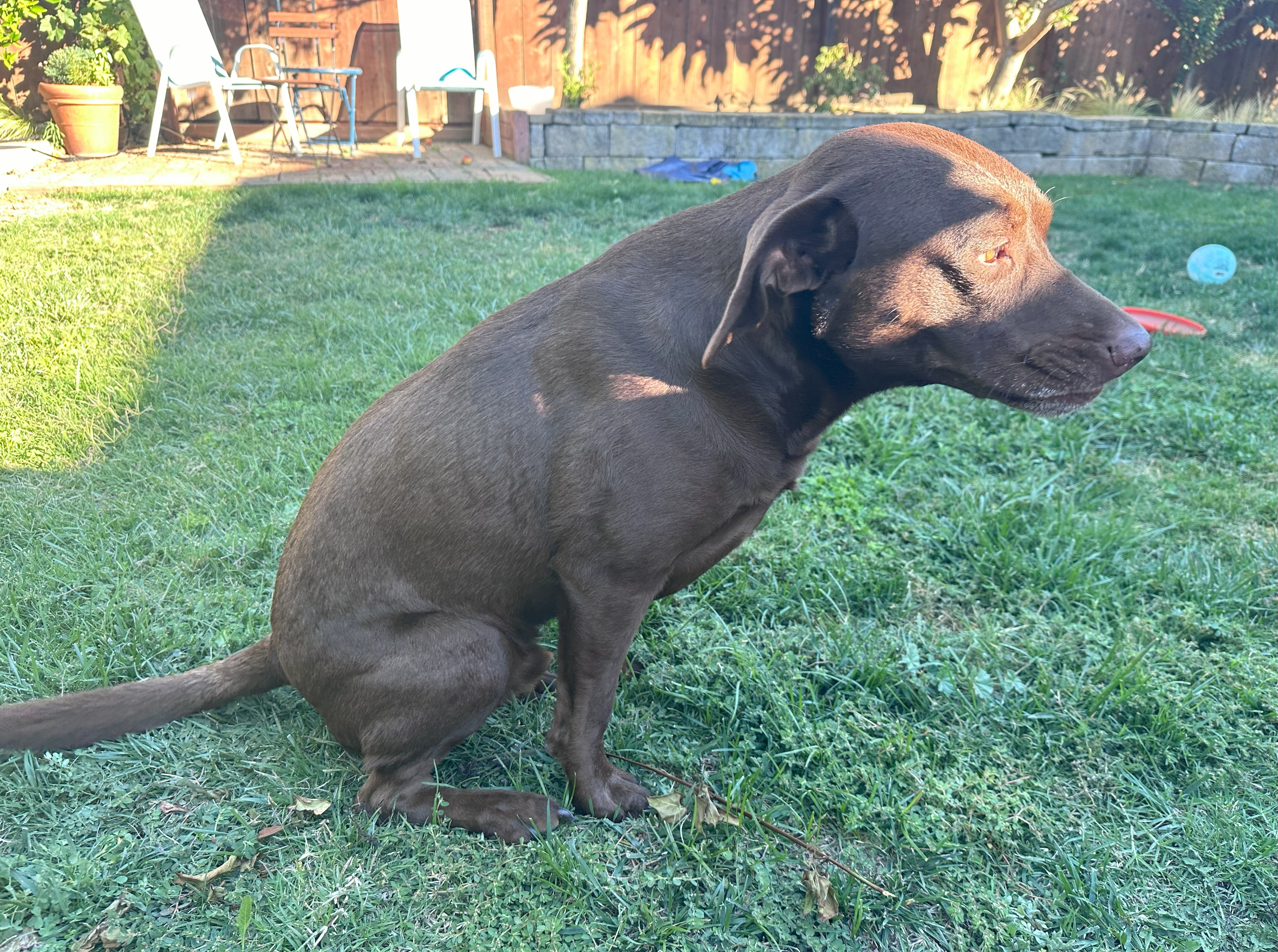
Imagine you have a sharp, throbbing ache in your lower back. You are tired, irritable, and every time you try to bend, stand up, or even take a step forward, pain shoots across your entire low back making it nearly impossible for you to move and function normally, and may even make you cry. Now imagine someone comes into your living room, demands that you execute a series of physical exercises, and when you hesitate or wince, labels you as "stubborn," "defiant," or "unmotivated."
It sounds absurd when applied to a human. Yet every single day, thousands of dogs with unaddressed physical discomfort are enrolled in behavior modification or training programs designed to fix "problem behaviors," without anyone first asking a fundamental question: Is this dog hurting?

Photo: Todd Sanchez / iStock
When a dog barks on leash, hesitates to sit, snaps when handled, or suddenly becomes reactive toward visitors, our cultural reflex is to treat it purely as a behavior or training problem. But modern veterinary research and somatic canine welfare science tell a remarkably different story: physical discomfort and behavior are deeply, inextricably linked. Trying to train through or modify a behavior without evaluating physical comfort first is not only ineffective; it undermines animal welfare.
What the Research Reveals: Pain Is Far More Common Than We Think
If you think pain is only a concern for senior dogs or when there are more obvious signs like limping, the scientific literature invites us to look much closer. A landmark review paper led by Professor Daniel Mills at the University of Lincoln, published in MDPI Animals (Mills et al., 2020), synthesizes several studies showing that pain plays a primary or contributing role in a staggering 28% to 82% of behavior cases.
Furthermore, research by Barcelos et al. (2015) and Camps et al. (2012), referenced in a comprehensive overview in the Veterinary Ireland Journal, revealed that in cases of dog aggression where pain was identified as a contributor, 75% of those cases stemmed from musculoskeletal pain, most notably hip dysplasia and elbow osteoarthritis.
These findings align closely with data from Canine Arthritis Management (CAM), a leading veterinary-led initiative dedicated to canine chronic pain education. According to CAM, osteoarthritis is the single most common cause of chronic pain in dogs, affecting an estimated 80% of dogs over eight years old and up to 35% of dogs across all age groups. Untreated arthritis is also one of the leading drivers of elective euthanasia in dogs. Because joint disease develops quietly and progressively, the earliest stages are almost always missed, frequently showing up first as behavioral irritability, reluctance to perform cues, or sudden reactivity rather than an obvious limp.
Consider these striking facts from the research:
- Pain lowers the emotional threshold: Pain reduces a dog's overall tolerance for environmental stress, lowering their threshold for frustration, fear, and defensive aggression (Landsberg et al., 2013).
- Treatment yields dramatic success: When underlying pain is identified and properly managed, the prognosis for resolving associated behavior problems is exceptionally high.
The Four Ways Pain Shows Up in Behavior
In Mills et al. (2020), researchers classified the relationship between pain and problem behavior into four distinct categories:
| Category | How It Manifests | Real-World Example |
|---|---|---|
| 1. Direct Manifestation | The behavior is a direct protective or defensive response to avoid pain. | A dog with hip dysplasia growling or snapping when someone reaches to touch their hindquarters or when approached while lying down. |
| 2. Secondary Underpinning | Unidentified pain sits quietly underneath a secondary issue, stalling training progress. | A dog whose separation anxiety includes destructive door-digging caused by plantar discomfort or spinal tension after rest. |
| 3. Exacerbation of Signs | Pain drains the dog's coping capacity, making existing mild concerns much worse. | A dog who was mildly cautious around strange dogs suddenly becomes lunging and reactive because aching joints make them feel vulnerable. |
| 4. Adjunctive Signs | Atypical behaviors that arise as a coping mechanism or distraction from discomfort. | Excessive surface licking, fly-snapping, star-gazing, sudden stone-eating (pica), or restlessness/pacing at night. |
Why Pain Is So Frequently Missed in Clinical Exams
If pain is so prevalent, why isn't it caught during routine veterinary visits? The answer lies in canine physiology, evolution, and the clinic environment itself:
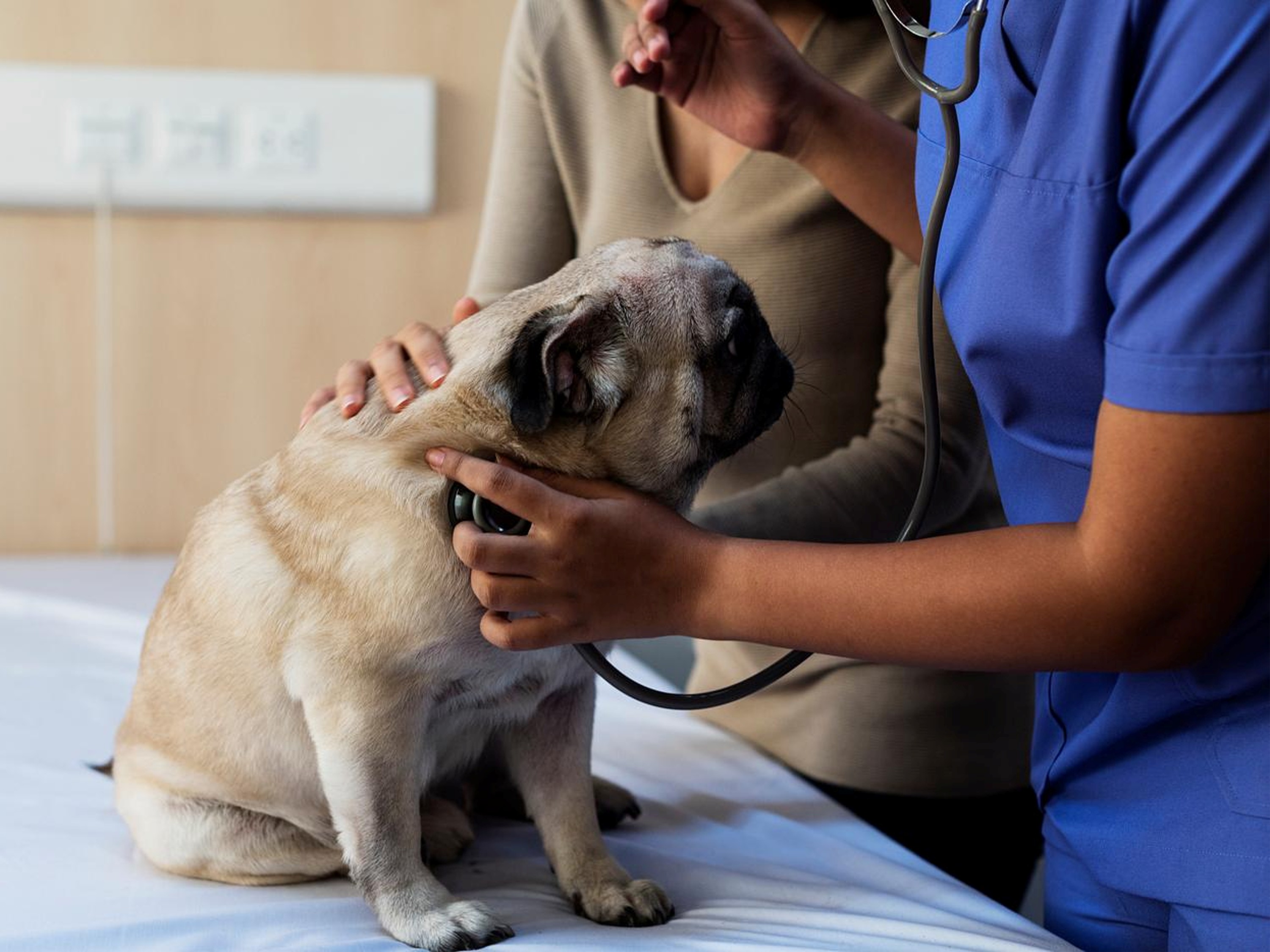
Photo: rawpixel.com
- Evolutionary concealment: Dogs are masters at hiding pain. Showing vulnerability in the wild invites threat, so domestic dogs carry chronic pain silently until it pushes them over threshold.
- Adrenaline & Endorphins mask discomfort: The excitement or anxiety of a car ride and vet visit triggers a rush of adrenaline and endorphins, the body's natural painkillers. A dog who limps or moves stiffly at home may walk briskly in the exam room!
- Brief snapshot exams: A 15-minute consultation on a slippery clinic floor can't capture how a dog rises from a nap, moves up and down stairs, or changes gait after 20 minutes of walking.
- Stoicism and breed bias: Research by Caddiell et al. (2023) found that while veterinarians and the public hold strong, widespread beliefs about breed-specific pain sensitivity (e.g., believing certain breeds are "stoic" or "dramatic"), quantitative sensory testing showed those beliefs did not align with actual biological sensitivity measurements.
Somatic Insights: Dr. Laura Donaldson on State Before Behavior
As pioneer Dr. Laura Donaldson, CDBC, emphasized in her somatic healing framework for dogs, emotional and physical balance cannot be forced through a cognitive, top-down approach or through obedience training. It must start at the physiological level: state always precedes behavior.
When a dog is in physical discomfort, their autonomic nervous system is kept in a continuous state of sympathetic activation (fight-or-flight) or hypo-arousal (shutdown). Asking an overwhelmed, aching dog to perform cues or "obey commands" when their nervous system is unsafe is asking the impossible. True safety and effective learning only happen when the body is comfortable and regulated.
Bridging the Gap: How to Help Your Dog
This gap between home behavior and clinic observation is exactly why it helps to work with a dog professional who has been specifically trained in the connection between behavior and pain, gait, posture, and movement analysis. A professional like Erika Liljefelt of Relax, Rover. can help you capture clear, objective visual evidence of how your dog actually moves and behaves in their everyday environment, the kind of real-world context a brief clinic exam simply can't provide.
You can also get started right away on your own. Canine Arthritis Management (CAM) offers a free download, "Taking Owner-Collected Videos for Your Vet," available on their website, that walks you through exactly how to film your dog at home so your veterinarian has the real-world footage they need.
Important Note on Scope of Practice:
Dog training and behavior professionals trained in movement analysis do not diagnose pain, illness, or injury; that remains the exclusive, vital responsibility of your veterinarian. Their role is to provide structured, objective observations to aid your vet or a specialist in diagnosis.
Why 6 to 8 Week Pain Trials Matter
When pain is suspected, veterinarians may recommend a trial course of pain relief (analgesia). As highlighted in the Veterinary Ireland Journal review, a pain trial should last 6 to 8 weeks to accurately evaluate results. Short 3- to 5-day trials are often inconclusive because:
- Anti-inflammatory and neuro-modulating medications take time to resolve chronic tissue inflammation and central nervous system sensitization.
- Dogs who have experienced long-standing pain need time to unlearn protective avoidance habits and regain confidence in pain-free movement.
- Muscle atrophy and compensatory gait patterns require time and gentle rehabilitation to rebuild.
Check for Pain First: A Kinder, Science-Based Path Forward
Before you hire a trainer, sign up for a class, or feel discouraged that your dog isn't making progress, take a step back and look at the whole picture. When we check for pain first, we replace frustration with empathy and guesswork with clear data.
If something feels "off" with your dog's movement, posture, or behavior, you don't have to guess alone. Tell me about your dog today, and let's work together to give your veterinarian the full picture, because every dog deserves to feel comfortable in their own body.
Ready to give your veterinarian the full picture? Tell me about your dog, and let's explore how we can help.
References and Further Reading
- Mills, D. S., et al. (2020). Pain as a cause of behaviour problems in dogs: A review. MDPI Animals, 10(2), 318. https://www.mdpi.com/2076-2615/10/2/318
- Canine Arthritis Management (CAM). Canine arthritis statistics and prevalence. Member Zone and education portal. https://caninearthritis.co.uk/member-zone/
- Understanding the link between canine pain and problem behaviours. Veterinary Ireland Journal. https://www.veterinaryirelandjournal.com/small-animal/388-understanding-the-link-between-canine-pain-and-problem-behaviours
- Barcelos, A. M., et al. (2015). Pain and aggression in dogs. Cited in the Veterinary Ireland Journal review of canine pain and problem behaviours.
- Camps, T., et al. (2012). Pain-related aggression in dogs. Cited in the Veterinary Ireland Journal review of canine pain and problem behaviours.
- Landsberg, G. M., et al. (2013). Pain and behavior in dogs. Referenced in Mills et al. (2020) regarding the effect of pain on emotional threshold.
- Caddiell, J., et al. (2023). Breed bias and pain tolerance in veterinary practice. Referenced in the section on stoicism and breed bias.
- Donaldson, L., CDBC. Somatic healing framework for dogs: state precedes behavior. Referenced in the section on somatic insights and the physiological basis of cooperative care.
Get new posts in your inbox
Compassionate, practical guidance for life with your dog — delivered when new articles are published. No spam, unsubscribe anytime.
The information in this article is educational and is not a substitute for individualized dog-training, behavior, or veterinary advice. Contact a qualified veterinarian regarding questions about your dog’s health or physical comfort.