
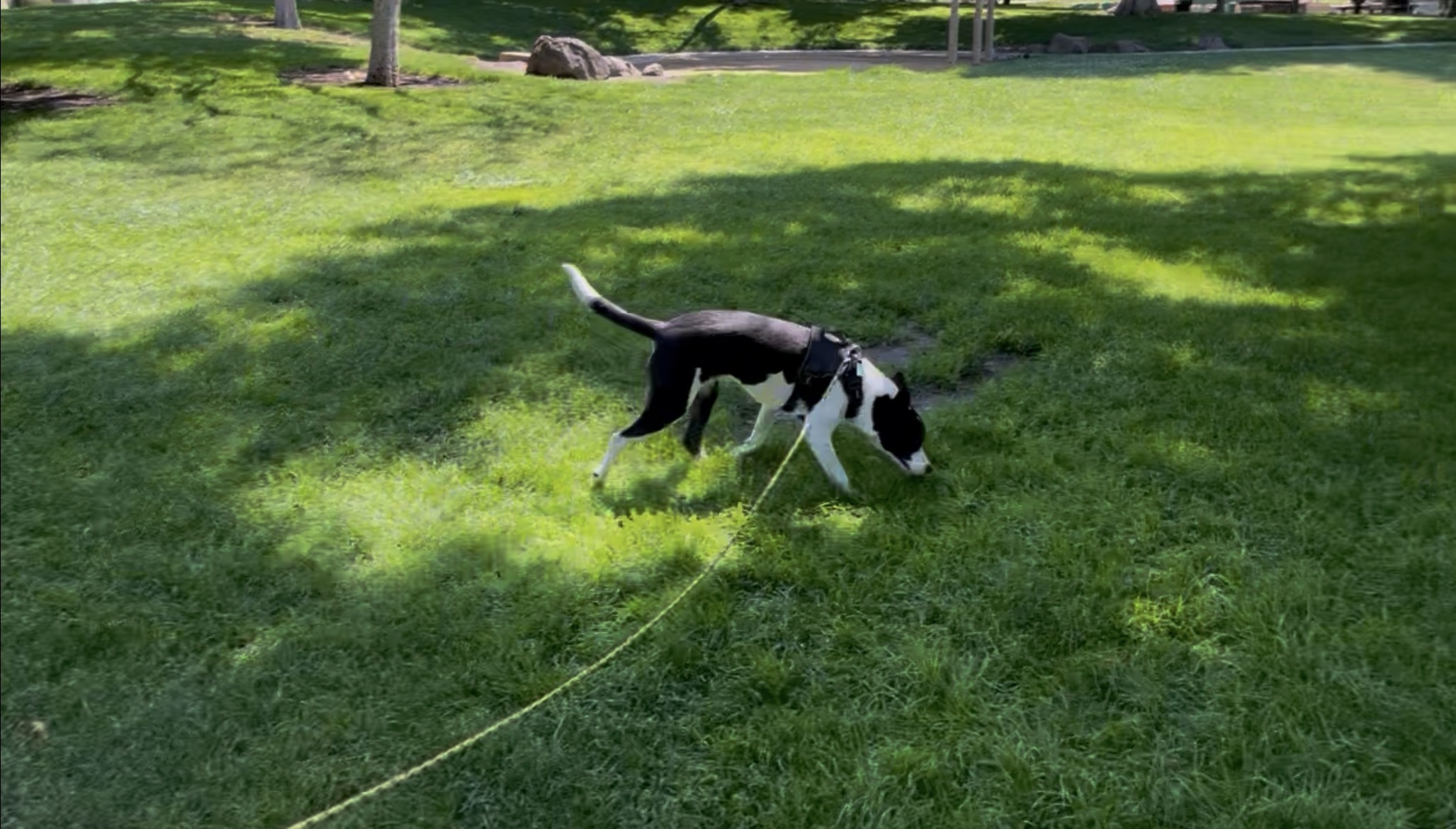
September is National Pain Awareness Month, a time dedicated to understanding how chronic discomfort impacts quality of life. While we often think of pain as a human experience, millions of dogs walk through the world every day carrying invisible physical suffering.
As dog guardians, when our companion suddenly starts pulling on the leash, reacting to other dogs, or refusing to walk down a familiar trail, our instinct is often to view it as a behavior issue. We ask ourselves: Why are they acting out? Why aren't they listening?
But what if the tension on the leash isn't a test of control? What if it's a cry for help?
The Silent Language of Canine Pain
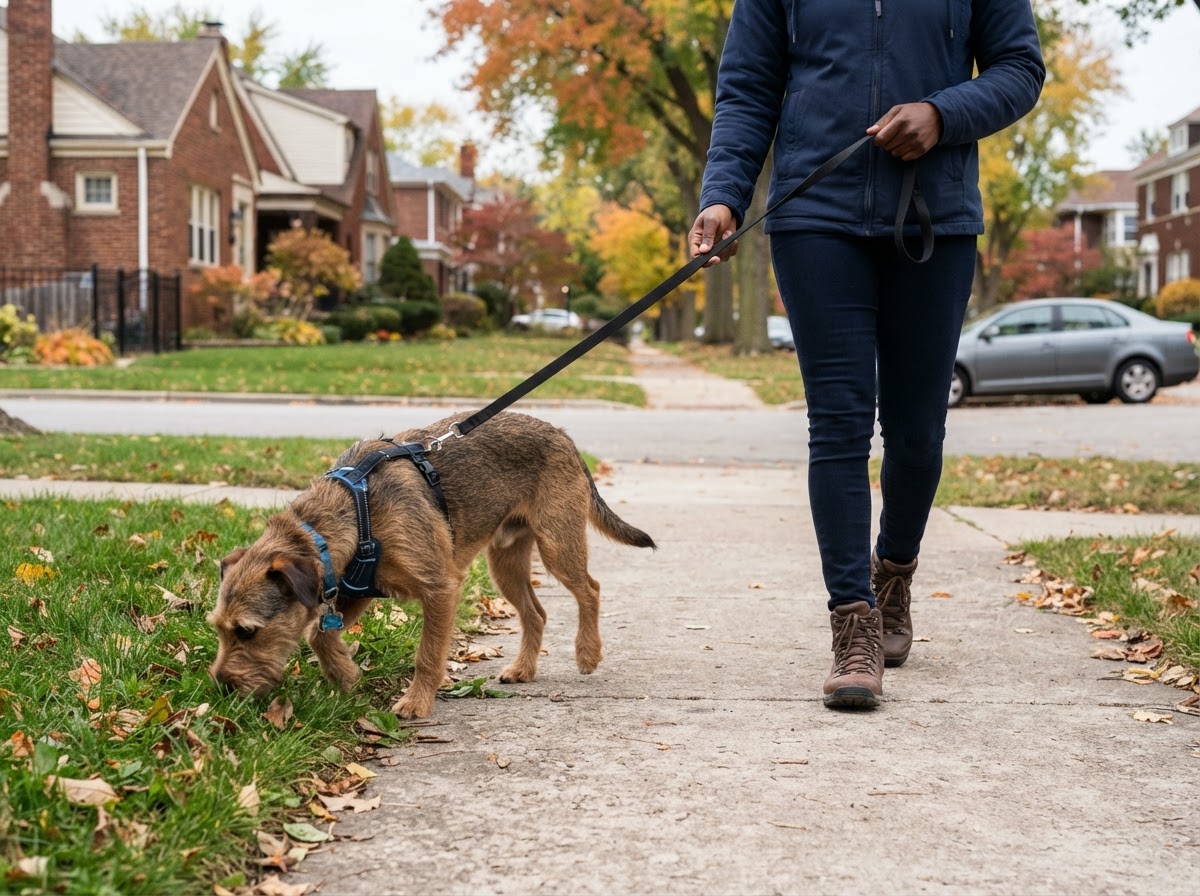
Dogs are evolutionary masters at masking physical vulnerability. In the wild, showing pain makes an animal a target, so domestic dogs often carry chronic pain quietly, until the pressure of the outside world pushes them past their threshold.
When a dog is experiencing underlying discomfort, their nervous system is already operating near capacity. Add the sensory overload of a neighborhood walk: tight leashes, approaching dogs and people, and loud vehicles, and that hidden pain manifests as what humans call "problem behavior."
Common behavior red flags that often stem from physical pain include:
- Sudden Onset Reactivity: Barking or lunging at sights or sounds they used to ignore.
- Reluctance to Move (often called "Stubbornness"): Sitting down, freezing, or refusing to walk.
- Changes in Leash Mechanics: Sudden pulling, hyper-vigilance, or inability to settle into a natural, sniffing rhythm.
- Sensory Sensitivity: Heightened anxiety, startling easily, or increased sensitivity when touched.
- Post-Walk Agitation: An inability to settle or rest after returning home from an outing.
The Pain-Behavior Loop
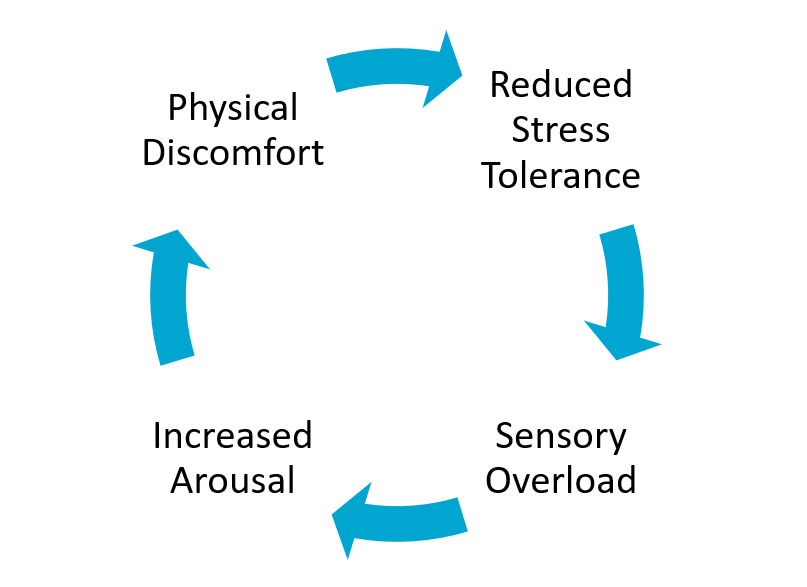
When a dog is in pain, their body is already working hard to manage discomfort. Every walk adds new demands: balancing on uneven ground, absorbing the impact of each step, and processing a constant stream of sensory input. As the nervous system becomes overwhelmed, the dog's threshold for tolerance drops. Behaviors that were once easy (passing a neighbor, walking on a busy street, or simply moving forward) suddenly feel impossible.
This creates a loop: pain lowers tolerance, the environment triggers a reaction, the reaction is labeled a "behavior problem," and the underlying physical cause goes unaddressed. The cycle repeats, often intensifying, because the root issue was never the behavior itself.
Shifting from Control to Curiosity
When a walk becomes stressful, the traditional impulse is to tighten our grip, issue firmer cues, or demand obedience. But if a dog's behavior is fueled by a throbbing hip or a sore back, applying physical restraint, pressure, or verbal demands only escalates their distress.
Instead of asking, "How do I stop this behavior?", Pain Awareness Month invites us to ask a far more compassionate question: "What is my dog experiencing right now?"
When we replace the desire for control with genuine curiosity, our relationship with our dogs transforms. We begin to see the walk not as an exercise in compliance, but as a shared journey where our dog's comfort, agency, and emotional safety take priority.

Photo: Kerkez / iStock
Four Ways to Support Your Dog This Month
If you suspect physical discomfort might be influencing your dog's behavior out on the trail or street, here are four immediate steps you can take:
1. Become an Observational Detective
Observe your dog's gait and body language on different surfaces. Do they prefer hard, even surfaces over grass and dirt? Do they struggle getting into the car or stepping off curbs? Keep a simple 7-day journal logging their behavior alongside weather changes, exercise duration, daily movement, as well as how much sleep they're getting in a 24-hour period and whether that has changed.
2. Trade Tight Leashes for Agency
If your dog is struggling, shorten the duration of your walks and lengthen your line. Giving your dog physical space and the freedom to choose their pace allows them to move in ways that accommodate their physical body without the added strain of leash tension.
3. Partner with Your Veterinary Team

Photo: AlexPhotoStock / iStock
Behavioral changes are clinical data. Take short video clips of your dog to share with your vet. (Check out Canine Arthritis Management's guide Taking Owner Directed Videos for Your Vet.) Because adrenaline and clinic stress often mask pain symptoms during a routine office visit, video footage provides your vet with essential real-world context. Schedule a thorough physical exam to investigate underlying physical causes before assuming a struggle is purely behavioral.
4. Consider a Dynamic Dog Assessment
For a deeper look into your dog's movement, consider a Dynamic Dog Assessment. Conducted by a certified practitioner, this specialized, non-invasive observation process analyzes micro-movements, posture, gait changes, and subtle signs of compensation that might easily be missed during a standard snapshot exam. Partnering with a Dynamic Dog Practitioner alongside your veterinarian and force-free behavior consultant ensures physical discomfort is evaluated with the thorough, holistic care your companion deserves.
Listening Across the Line
A walk should never be a battle of wills. When we tune into the subtle, non-verbal feedback traveling along the leash, we stop seeing "defiance" and start recognizing a partner who needs our support.
This September, let's honor our dogs as autonomous, feeling individuals. By getting rid of rigid expectations and listening to what their movement is telling us, we step off the path of control and onto the path of true connection.
Get new posts in your inbox
Compassionate, practical guidance for life with your dog — delivered when new articles are published. No spam, unsubscribe anytime.
The information in this article is educational and is not a substitute for individualized dog-training, behavior, or veterinary advice. Contact a qualified veterinarian regarding questions about your dog’s health or physical comfort.