

Have you ever had a moment where something you've looked at every day suddenly appears completely different? For many dog guardians, this happens when we begin learning about subtle stress signals, canine body language, and the hidden ways dogs express discomfort. Learning to read these quiet details can feel like stepping through a portal. Once your eyes open to the shifts: an odd sit, a change in coat texture, or a sudden fear of loud noises, you start connecting dots you never noticed before. And once you see it, you cannot unsee it.
And for many loving guardians, that awareness brings an unexpected, heavy wave of emotion: guilt.
When we realize that a behavior we thought was "just a quirk" or "normal for their breed" might actually be a quiet sign of physical discomfort, our hearts sink. We start doing the math in our heads. We look back at old photos or recall years of shared moments and think, "Have they been hurting this whole time? How did I miss this?"
If you are feeling that knot in your chest right now, take a slow breath and give yourself some grace. You are in a safe, non-judgmental space, and what you are feeling is completely valid.
We Don't Know What We Don't Know

As professionals, guardians, and human beings, we have all walked this path. Every single person who lives with dogs has missed something at some point because we can only interpret the world through the knowledge we have in any given moment.
Dogs are master concealers of pain. Their survival instincts tell them to carry on quietly, and their signs of distress are often subtle micro-movements that require specialized training to spot. It is completely natural to look back with new eyes and feel frustrated, especially if you've sought help before, visited professionals, or were told everything was "fine."
The truth is simple, even if it is hard to hold: You didn't ignore your dog. You loved them with all the knowledge you had at the time.
Navigating the Overwhelm and Finding Your Compass
It is easy to spiral into panic when you start realizing how closely pain and behavior are linked. You might find yourself second-guessing every movement or feeling overwhelmed by the vast world of diagnostic options, therapies, and fear of being taken advantage of by well-meaning (or ineffective) treatments.
How do you know what is real, and how do you protect yourself and your dog?
You do not have to figure this out alone, and you do not need to fix everything overnight. Your best compass is a trusted, collaborative care team: a pain-aware and behavior-savvy veterinarian or specialist, a force-free behavior consultant, a Dynamic Dog Practitioner who listen to your lived experience with your dog and take your concerns seriously. You don't have to guess or navigate the noise by yourself; a true partner in care will help you sort through the possibilities gently, step by step, without gaslighting you or making you feel bad.
A Somatic Practice: Moving From Guilt to Grounded Connection

When heavy self-blame takes over, our nervous systems enter a state of stress. Our dogs, who are finely attuned to our emotional states, can sense that tension. To help your dog feel safe today, the most important thing you can do is offer safety to yourself first.
Here is a simple, somatic grounding practice drawing from eCPR (Emotional CPR), Dr. Laura Donaldson's somatic bodywork, and Metta (Loving-Kindness) to help you process guilt and come back to the present moment.
Step 1: Embodying and Grounding
Before you reach out to touch or comfort your dog, bring your awareness back to your own body.
- Feet on the floor: Sit comfortably and press the soles of your feet firmly into the floor. Feel the solid, steady earth beneath you, supporting your weight without any effort from you. Or sit on the floor near your dog and focus on where your body is connecting to the Earth.
- Hand to heart: Gently place one hand (or both) over your chest or heart center. Feel the warm pressure of your hand against your body.
- Soft exhale: Take a breath in, and let out a slow, gentle exhale through your mouth. Allow your shoulders to drop away from your ears.
Step 2: Practicing Metta (Loving-Kindness)
Hold your hand on your heart, acknowledge the grief or frustration you are feeling, and softly repeat these words to yourself:
May I forgive myself for what I didn't know.
May I offer myself peace, so I can offer my dog safety.
We move forward together from today.
Step 3: Reconnecting (eCPR)
Now, look at your dog without analyzing them, diagnosing them, or looking for answers. Simply observe them with unconditional presence and love.
If your dog is comfortable with touch and seeks proximity, offer a quiet, steady hand. If they prefer space, simply sit near them in shared quietness. You are no longer trapped in the past or anxious about the future; you are two living beings sharing the safety of this present moment.
Moving Forward From Today
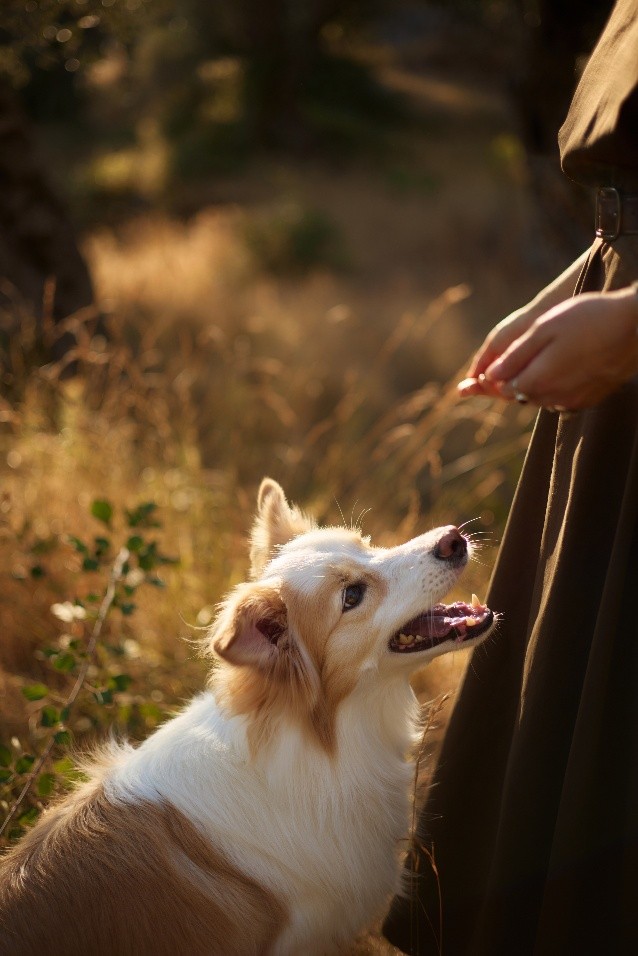
Photo: Anna-av / iStock
You cannot rewrite the years behind you, but you have given your dog an extraordinary gift: you are listening now.
Learning new information isn't a reminder of where you failed; it is the doorway to how you support them moving forward. Every journey of healing starts in the present tense. Take a deep breath, let go of the weight of yesterday, and take the next step forward together.
Get new posts in your inbox
Compassionate, practical guidance for life with your dog — delivered when new articles are published. No spam, unsubscribe anytime.
The information in this article is educational and is not a substitute for individualized dog-training, behavior, or veterinary advice. Contact a qualified veterinarian regarding questions about your dog’s health or physical comfort.